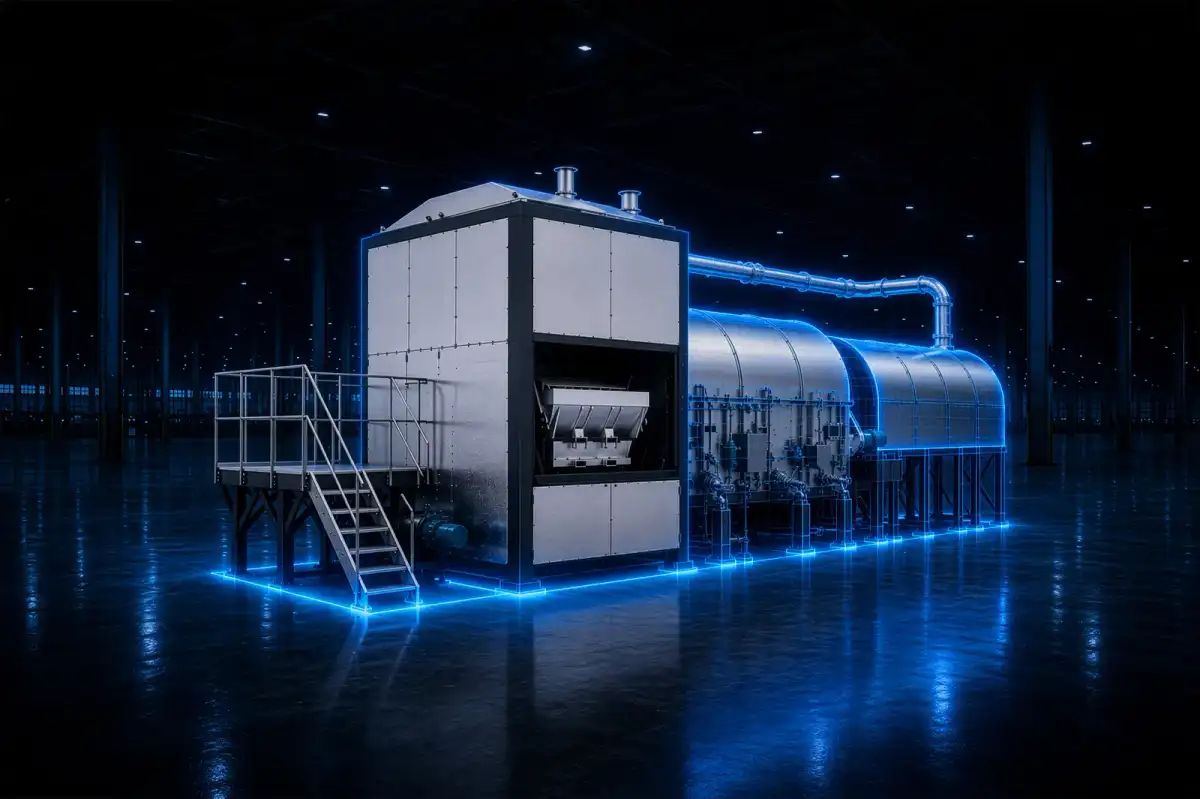
Recover the metal.
Cool the dross. In 15 minutes.
Indirect rapid cooling that brings hot aluminum dross down to under 100°C in 15 minutes — recovering 10–30% more of the trapped metal than conventional cooling methods, while it's still worth recovering.
Explore the systemAluminum's hidden loss.
Every time aluminum is melted, oxygen attacks the surface and turns valuable metal into dross — a slag-like by-product that traps metal inside its oxide shell. The longer it sits hot, the more it oxidizes. Without rapid cooling, that metal is lost forever to the slag pit.
- 01 Material loss per batch (uncooled) 2 – 10%
- 02 Metal lost per minute while dross stays hot ~ 1%
- 03 Recoverable metal in white dross 15–80%
- 04 Higher recovery vs. conventional cooling 10–30%
0%
Up to 10% of every batch is lost as oxidized aluminum if dross is left to cool slowly under shop-floor air. With rapid indirect cooling, that figure drops to fractions of a percent.
Indirect cooling. No flame contact.
Hot dross enters a slowly rotating drum. Heat passes through the drum shell into an external cooling jacket — the metal stays mechanically intact, never wetted, never burned again.
-
01
Indirect cooling
No water, no spray, no gas in contact with the dross. Heat conducts through the drum shell into an external cooling jacket — the metal stays dry and mechanically intact.
-
02
Rotation breaks the crust
Slow tumbling continuously exposes fresh surface, fractures the oxide shell, and releases trapped metal droplets — the recovery step happens inside the cooling cycle.
-
03
15-minute cycle
From hot skimming temperature to under 100°C in one continuous batch. No re-handling, no holding time, no further oxidation losses.
-
04
Electric drive
Passive, closed system: heat is removed indirectly through the drum shell, with no flame contact. The only continuous input is electricity for the drum drive.
One drum. Three working zones.
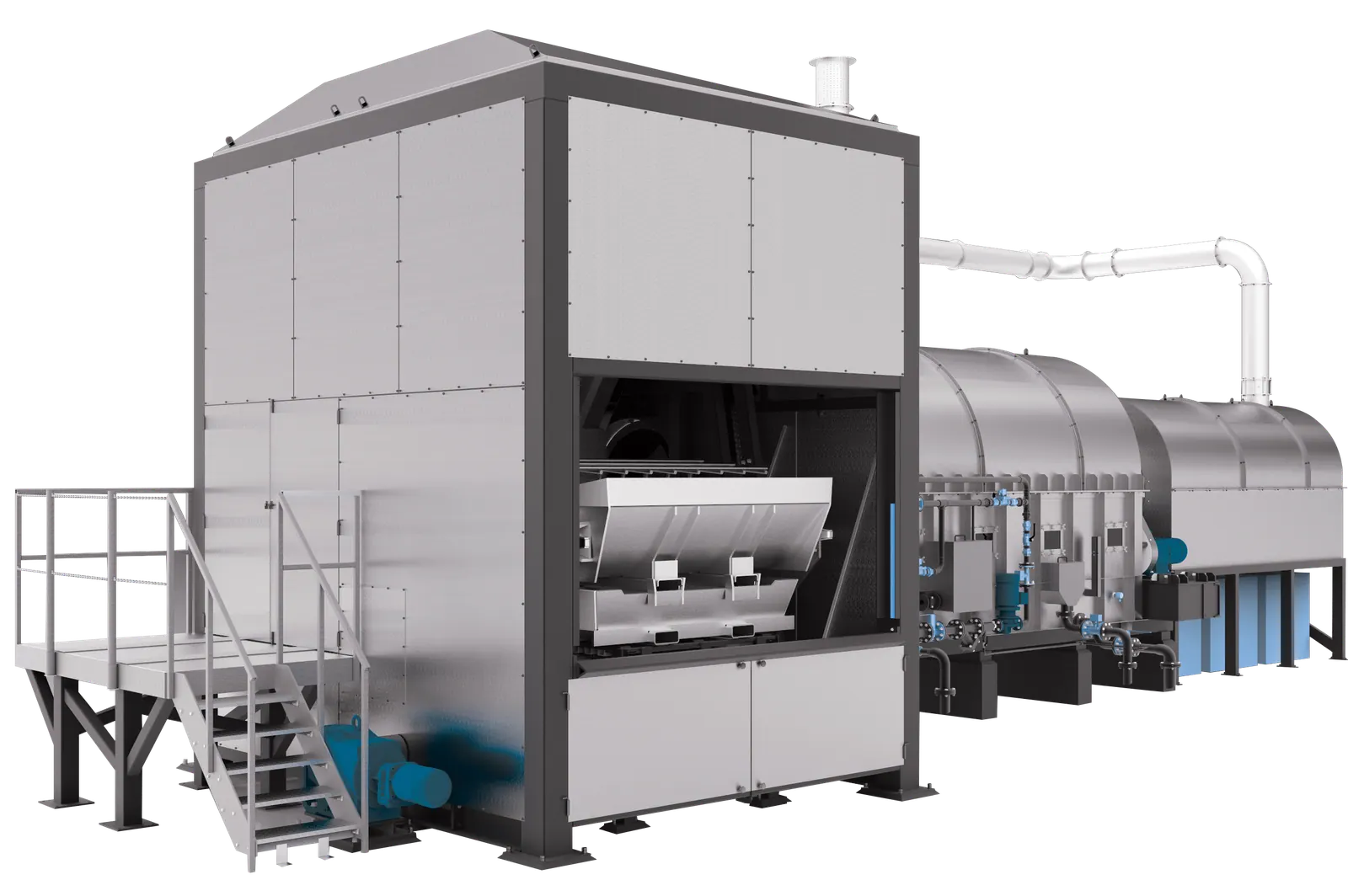
From skimming heat to <100°C in fifteen minutes.
t = 0 min
0 °C
Hot in
Dross enters the drum directly from the furnace — molten metal still trapped inside the oxide crust.
t = 5 min
0 °C
Phase change
Trapped aluminum droplets fall below solidus. Mechanical tumbling cracks the oxide shell open.
t = 10 min
0 °C
Stabilized
Material is now solid throughout. No further oxidation can occur — the metal is recovered intact.
t = 15 min
0 °C
Cooled out
Discharged below 100°C, ready for sorting and direct return to the melting line.
Technical data.
12,000kg/h
Continuous, uninterrupted
15min
Hot to discharged
10–30%
More than conventional cooling
<100°C
Safe discharge
Typical melt loss per input material.
Light Gauge Sheet Scrap
5.0%
Typical melt loss as dross for this input material. The more metal ends up in dross, the more a Rotary Dross Cooler recovers — 10–30% more than conventional cooling.
Lower estimate
2.0%
Higher estimate
5.0%
Reference installations.
RDC 240
Constellium Děčín
Czech Republic — design, fabrication, installation & commissioning
RDC 750
Customer in Italy
Italy — design, fabrication, installation & commissioning
240–1200
Full model range
From 2,400 to 12,000 kg/h, sized to the casthouse
Ready to recover the metal?
Tell us your throughput, alloy mix, and operating context. We'll come back with a feasibility study, sizing proposal, and pricing — within one business day.